
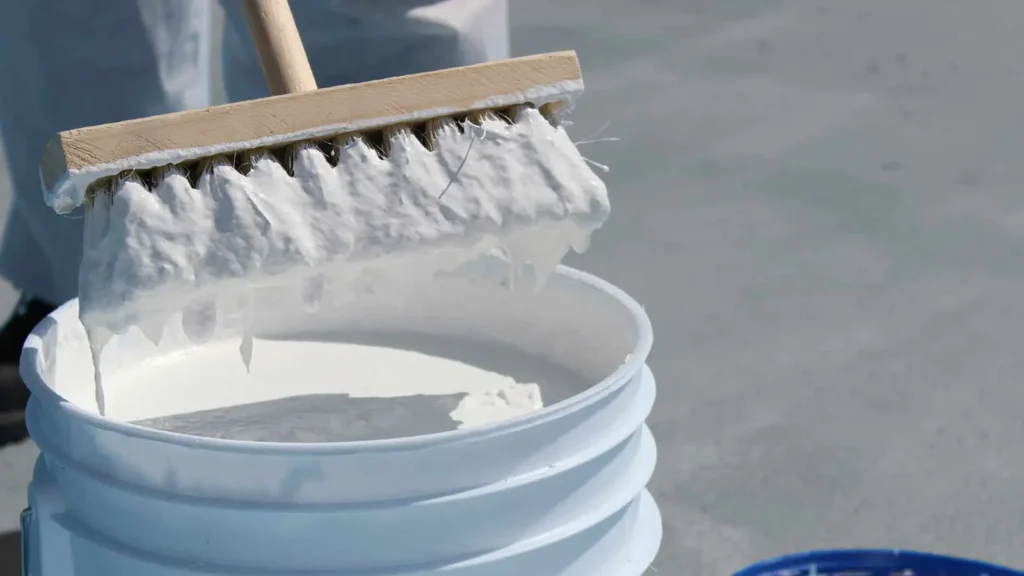
Silicone roof restoration cleans, repairs, and recoats an aging flat or low-slope roof with liquid silicone instead of tearing it off. Our spec calls for 3 gallons of silicone per 100 square feet, applied in two coats. Below is every line of that spec and why it’s there.
Most coating quotes say “apply silicone” and stop. That’s the problem. Two bids can name the same product and still describe very different roofs. So we’re showing our work.
What Is Silicone Roof Restoration?
Silicone roof restoration is a process that renews a worn flat or low-slope roof without a tear-off. The crew cleans the surface, seals seams and cracks, provides any repairs that need doing, and rolls on liquid silicone. It cures into one seamless, rubber-like layer that sheds water, stands up to sun, and adds years to the roof underneath.
Which Roofs Are Good Candidates
It fits roofs that are worn on top but still solid underneath. Think older built-up roofs, cap sheet, metal, spray foam, and many single-ply membranes. It’s a common fix for the commercial buildings we see across Boulder and the Front Range.
When Silicone Is the Wrong Call
A coating can’t fix what it covers. If the insulation is soaked or the deck is soft, silicone just seals the problem in. Those roofs need commercial roof repair or replacement first. That’s why every restoration starts with an honest inspection, not a sales pitch.
Our Silicone Roof Restoration Spec, Step by Step
The spec below was written for a low-slope roof with an old aluminum coating that was breaking down. Here’s the full scope in six steps:
Pressure wash the whole roof. We use commercial-grade equipment with a rotating surface cleaner with a proprietary cleaner. It strips dirt, loose coating, and worn aluminum coating residue. Then the roof dries completely.
Seal every detail. Silicone mastic goes on all repairs, pipes, vents, flashings, seams, and spots where roof surfaces meet.
Reinforce big gaps. Any gap or crack wider than 1/4 inch gets a three-course repair: mastic, reinforcing fabric, then more mastic.
Apply the base coat. One gallon per 100 square feet covers the whole roof and seals the old surface.
Apply the finish coat. Two more gallons per 100 square feet build the final thickness.
Inspect before we leave. We check coverage, adhesion, and every repair against the manufacturer’s rules.
Why the Old Silver Coating Has to Go
Silicone sticks only as well as the surface under it. If old aluminum coating is flaking, the new silicone will flake right along with it. So the wash doesn’t just make the roof look clean. It takes the roof down to a surface that will hold.
Pro Tip: Ask your contractor to do a small adhesion test patch before the full job. Manufacturers recommend it, and it takes guesswork out of whether the coating will bond.
Why We Draw the Line at 1/4 Inch
Small cracks get sealed with mastic alone. Gaps wider than 1/4 inch move too much for that. Roofs stretch and shrink as temperatures swing, and a wide gap will tear plain mastic over time. Fabric pressed between two layers of mastic acts like rebar in concrete. It holds the repair together as the roof moves.
Why 3 Gallons per 100 Square Feet Matters
Here’s the part most homeowners and building owners never see on a bid. The amount of silicone decides how thick the finished layer is. Thickness decides how long it lasts.
The Math in Plain Terms
One gallon spread over 100 square feet makes a wet layer about 16 mils thick. A mil is a thousandth of an inch.
Some silicone products are sold as one-coat systems at around 1.25 to 1.5 gallons per 100 square feet. Our spec uses double that, in two coats. Two coats also mean the second pass covers any thin spots or pinholes the first one missed.
Did You Know? Roofers call 100 square feet “one square.” So a coating quote that says “3 gallons per square” means the same thing as our spec.
What to Check on Any Silicone Bid
Ask three questions before you sign. How many gallons per square, total? How many coats? What happens to cracks wider than 1/4 inch? If a contractor can’t answer in numbers, you can’t compare their bid to anyone else’s.
Silicone Restoration in Colorado’s Climate
Front Range roofs take a beating. We get strong sun at altitude, heavy snow that sits for days, and freeze-thaw swings that crack stiff materials.
Snow, Ponding Water, and Freeze-Thaw
Silicone handles ponding water better than most coatings. Many acrylics soften when water sits on them, but silicone holds up. It also stays flexible in the cold, so it moves with the roof instead of cracking. That matters on flat roofs where melting snow can pool for days.
Energy Savings Are a Bonus, Not the Reason
Here’s a take you won’t hear from most coating sales reps. In Boulder, energy savings shouldn’t be the main reason you choose silicone. ENERGY STAR notes that cool roofs save the most in hot, sunny climates and on buildings with little insulation. Our winters cut into those gains.
The heat drop is still real in summer, though. In one Lawrence Berkeley National Laboratory study, a reflective coating cut roof surface temperatures on hot afternoons from 175°F to 120°F. We see silicone as a waterproofing upgrade first. Lower summer cooling bills come along for free.
Did You Know? Once a roof has silicone on it, future recoats generally need to be silicone too. Few other coatings will stick to it.
Pro Tip: White silicone collects dirt over time and looks grayer. A gentle rinse every year or two keeps it brighter and more reflective.
For a wider look at acrylic, silicone, and other options, see our guide to energy-efficient roof coatings. You can also learn more about our roof coating services in Boulder.
The Bottom Line on Silicone Roof Restoration
A silicone roof restoration is only as good as its spec. Clean prep, reinforced repairs, and real thickness are what turn a coating into a roof system. Silicone does the waterproofing, but the prep and repairs underneath decide whether it stays put through a Colorado winter. Knowing the gallons per square on your bid tells you more than the brand name on the pail.
If your flat or low-slope roof is aging but still sound, schedule a free roof inspection with Roof Masters of Colorado. We’ll tell you honestly whether silicone restoration fits your roof, and show you the full spec in writing. If it isn’t the right fit, we’ll say so and walk you through repair or replacement options instead.
Frequently Asked Questions
Can you put silicone over an old aluminum roof coating?
Yes, but only after the loose aluminum coating is pressure-washed off and the roof is fully dry. Whatever remains must be firmly bonded. An adhesion test patch confirms the silicone will stick before the full job begins.
How much silicone roof coating do you need per 100 square feet?
Our spec uses 3 gallons per 100 square feet: 1 gallon for the base coat and 2 for the finish coat. That builds about 48 mils of wet coating. Manufacturer minimums vary by product and roof type.
What is a three-course repair on a flat roof?
A three-course repair is a layer of mastic, a strip of reinforcing fabric, and a second layer of mastic. It’s used on cracks and gaps too wide for mastic alone. The fabric keeps the repair from tearing as the roof expands and contracts.
Is silicone roof restoration cheaper than a roof replacement?
Usually, yes, because there’s no tear-off, no disposal, and less labor. It only saves money when the existing roof is still sound, though. A roof with wet insulation or a damaged deck needs repair or replacement first.