
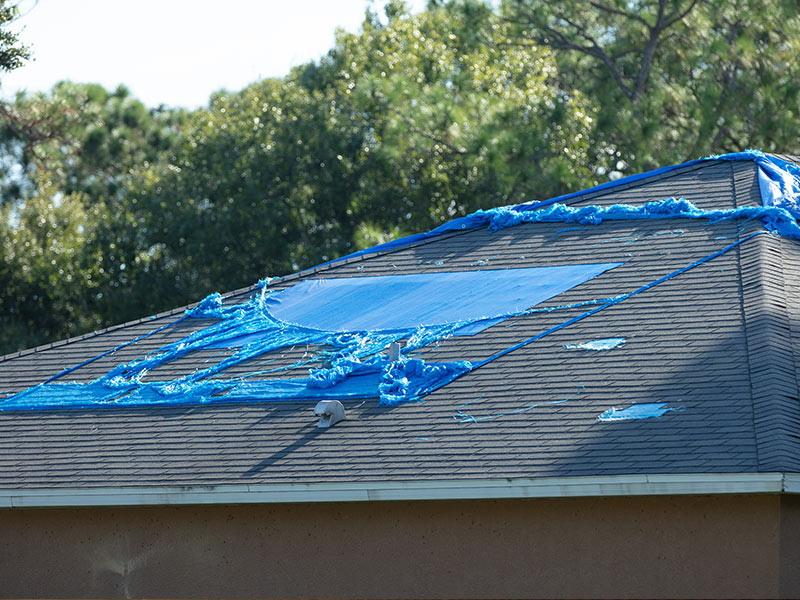
If water is coming through your roof, start indoors: move people and belongings away from the drip, place a container under the water, and avoid wet electrical equipment. Then document the damage and call a roofer. Emergency roof leak repair is about stopping more damage without putting yourself on a slick or unstable roof.
Start With the First Safe Steps
A roof leak can move through insulation, framing, and ceilings before you see it. The first few minutes should protect your home and the people inside it.
Move People, Furniture, and Electronics
Keep children and pets out of the affected room. Move furniture, rugs, and electronics away from the drip when you can do so safely. Put a bucket or pan under the water, but do not stand under a sagging ceiling. A bulge can mean water is collecting above the drywall.
If water is near a light fixture, outlet, appliance, or electrical panel, keep your hands away. Shut off power to the affected area only if you can do it from a dry, safe location. Ready.gov warns that wet electrical equipment and standing water can create an electrocution risk during cleanup. Read its disaster recovery safety guidance before you enter a damaged area.
Record What You See
Take photos of the ceiling stain, drip path, damaged belongings, and any visible roof damage from the ground. Write down when you first noticed the leak and whether it followed rain, hail, wind, or melting snow. This record helps a roofer trace the problem and gives you useful documentation for your insurance company.
Pro Tip: Use a pencil to mark the outer edge of a ceiling stain. Add the date and time beside the mark. If the stain grows, you will have a simple record of the change.
Do Not Turn a Leak Into a Fall
A wet roof is not a safe place for a homeowner with a ladder. Snow, ice, wind, steep slopes, and loose shingles can make a small leak a serious fall hazard. Do not climb up to place a tarp, inspect a valley, or pull off damaged material.
You can look from the ground with binoculars if conditions allow. From inside, you may also check the attic from a stable floor or walkway. Look for damp wood, dark stains, wet insulation, or daylight around a roof penetration. Do not step on ceiling drywall, insulation, or roof framing that is not designed as a walkway.
Use a Tarp Only as a Temporary Measure
A tarp can reduce water entry while you wait for a professional, but it is not a permanent roof leak repair. A tarp placed badly can trap water, tear in the wind, or damage shingles. Roof Masters lists storm damage roof repair and free estimates on its storm damage roof repair page, so ask about a safer temporary cover instead of climbing onto the roof yourself.
Did You Know? The visible ceiling stain may be several feet away from the actual roof opening. Water can travel along decking, rafters, insulation, or drywall before it reaches the room below.
Check the Likely Leak Areas From a Safe Place
A safe indoor check can give you useful clues, but it cannot replace a roof inspection. The main question is not only where water appears. It is how the water is getting past the roof system.
Flashing, Vents, and Valleys
Flashing seals roof edges, walls, chimneys, skylights, and other openings. Loose metal or failed sealant can let wind-driven rain enter even when nearby shingles look intact. Plumbing vent boots can split with age, and valleys can collect water when damaged material or debris blocks the flow.
The U.S. Department of Energy lists roof leaks, damaged flashing, and ice dams as sources of attic moisture in its Guide to a Durable Attic. The guide also explains how insulation, air sealing, and ventilation affect attic moisture. Those details matter when a leak returns after the visible patch looks dry.
Shingles and Roof Edges
From the ground, look for missing, cracked, lifted, or darkened shingles. You may also see exposed underlayment, bent metal, or damage near a rake or eave. Hail can bruise shingles without leaving a large hole, and wind can lift a shingle edge without removing it completely.
Do not touch loose material or pull at a shingle. Take a photo and let a trained roofer check the roof surface. The Roof Leak Repair Before Winter guide covers common Colorado leak points in more detail.
Call for the Right Kind of Inspection
A roof leak needs more than a patch over the first wet spot. A useful inspection traces the likely entry point, checks nearby materials, looks for hidden moisture, and explains what the roof needs next.
Roof Masters of Colorado provides residential roof repair in Boulder and serves the Front Range. The company also handles storm-related roof repair. When you call, share the roof type if you know it, the room where water appeared, the weather that preceded the leak, and whether the drip is still active.
Ask the roofer to show you:
- The likely entry point and the evidence behind that conclusion.
- Any damaged shingles, flashing, vents, decking, insulation, or drywall.
- What temporary work is needed before permanent repair.
- Whether the recommendation is a focused repair, broader repair, or replacement.
- What the quoted work does not include.
Pro Tip: Ask for photos and a plain explanation before approving work. A clear recommendation should separate the confirmed damage from anything that can only be known after materials are opened.
Repair or Replacement? Let the Roof Decide
One leak does not automatically mean you need a new roof. A focused repair may make sense when the problem is limited to a few shingles, one vent boot, a short section of flashing, or another small area. The surrounding roof and decking must still be in sound condition.
Broader work may fit when leaks appear in several locations, the roof is near the end of its service life, the decking has widespread damage, or past repairs keep failing. Repeated patching can hide the pattern without fixing the cause. Ask for both options when both are reasonable, then compare the work covered, material, warranty, and expected service life.
What to Do After the Emergency
Keep the damaged-area photos, the inspection report, invoices, and notes about the weather. If you plan to file an insurance claim, ask what documentation the carrier needs before cleanup changes the evidence. Do not authorize unsafe roof access just to speed up a temporary fix.
Did You Know? Colorado’s hail and wind seasons can expose a weak roof before winter arrives. A small opening that stays manageable during a dry week can become a larger interior problem after repeated rain, snow, or freeze-and-thaw cycles.
Emergency Roof Leak Repair Questions
How fast should I respond to a roof leak?
Respond as soon as you can safely protect the room and stop avoidable interior damage. A roofer can tell you whether the leak needs same-day mitigation, a temporary weather cover, or a scheduled repair after the roof is safe to access.
Can I put a tarp on my roof myself?
No, not when the roof is wet, icy, steep, or damaged. A tarp is a temporary measure, and climbing can cause a serious fall or more roof damage. Ask a roofing professional about a safer cover and a permanent repair plan.
Does a roof leak always mean roof replacement?
No. A limited leak may need only a focused repair when the surrounding roof and decking remain sound. The right choice depends on the leak source, roof age, damage pattern, and condition found during the inspection.
What should I do if water reaches an outlet?
Keep away from the wet area and do not touch electrical equipment while standing in water. If it is safe to do so, shut off the affected circuit from a dry location and contact a qualified electrician or emergency professional before entering the area again.
Stop the Water Without Taking a Bigger Risk
Protect the inside of your home, keep off a dangerous roof, and document the damage before conditions change. A bucket and photos can limit the immediate mess, but they do not identify the entry point or fix the roof system.
Roof Masters of Colorado can inspect the damage, explain the repair options, and provide a free estimate. Contact Roof Masters of Colorado or call (720) 536-5585 if you need emergency roof leak repair in the Boulder area or storm-related help across the Front Range.