
By Monica — Owner, Roof Masters of Colorado | Boulder, CO | Updated February 2026
Meet the Expert Monica is the owner of Roof Masters of Colorado, a woman-owned and operated roofing company based in Boulder, CO. Her company holds a BBB A+ rating, is an Owens Corning Platinum Preferred Contractor, a Malarkey Certified Contractor, and is a multi-year Boulder County Gold People’s Choice Award winner. Roof Masters serves the entire Front Range — from Boulder and Longmont to Erie, Lafayette, and beyond.
Colorado roofs typically last 15–18 years — shorter than the national average — because of hailstorms, extreme UV at altitude, and brutal freeze-thaw cycles. This guide covers what to inspect each season, how to identify and document hail damage, how to navigate an insurance claim, and how to find a trustworthy local roofer on the Front Range.
What to Check on Your Roof Every Season
Staying ahead of roof problems saves real money. A quick visual inspection four times a year — from the yard with binoculars — is all it takes to catch most issues early. You don’t need to climb up there.
Spring
Spring reveals winter’s damage. Look for lifted or buckled shingles from ice and snow weight, missing shingles along the edges or ridgeline, and granules collecting in your gutters — those sandy bits mean your shingles are wearing down. Inside the house, check for dark wet spots or stains on your ceiling.
Spring also marks the start of hail season in Colorado. After any storm, do a quick scan from the ground. Hail damage rarely looks dramatic from below, but it can quietly destroy a roof over time.
Summer
At 5,000+ feet, UV hits harder than most homeowners realize. Over years, that sun exposure breaks down shingles faster than anywhere at sea level. Look for shingles that appear faded, dried out, or cracked — and watch for more granules in the gutters, which signals the shingles are drying out.
“I’ve seen roofs here age five or six years faster than the manufacturer warranty suggests, just because of the altitude and sun exposure. Colorado UV is no joke.” — Monica, Roof Masters of Colorado
Fall
October is the most important inspection window. Clear gutters and roof valleys so water can drain freely before winter. Trim any branches that touch or hang over the roof — wind moves them back and forth and slowly grinds away at shingles. Check the flashing around your chimney and skylights; that’s typically where leaks begin. Take a flashlight into the attic and look for daylight, wet spots, or dark staining on the wood.
Pro Tip: The valleys — those V-shaped areas where two roof sections meet — collect debris fast. If water can’t move through freely, you’ll have drainage problems all winter long.
Winter
What is an ice dam? An ice dam forms when snow melts on your warmer upper roof, runs down, and refreezes near the cold edge. That ridge of ice forces water back under your shingles and into your attic, walls, and ceilings.
Signs of an ice dam: a thick ridge of ice along your roof edge or gutters, icicles that keep returning after warm days, or water stains near exterior walls inside the house. Don’t chip at the ice yourself — you’ll damage the shingles. Call a professional.
The Hail Problem — Colorado’s Biggest Roof Threat
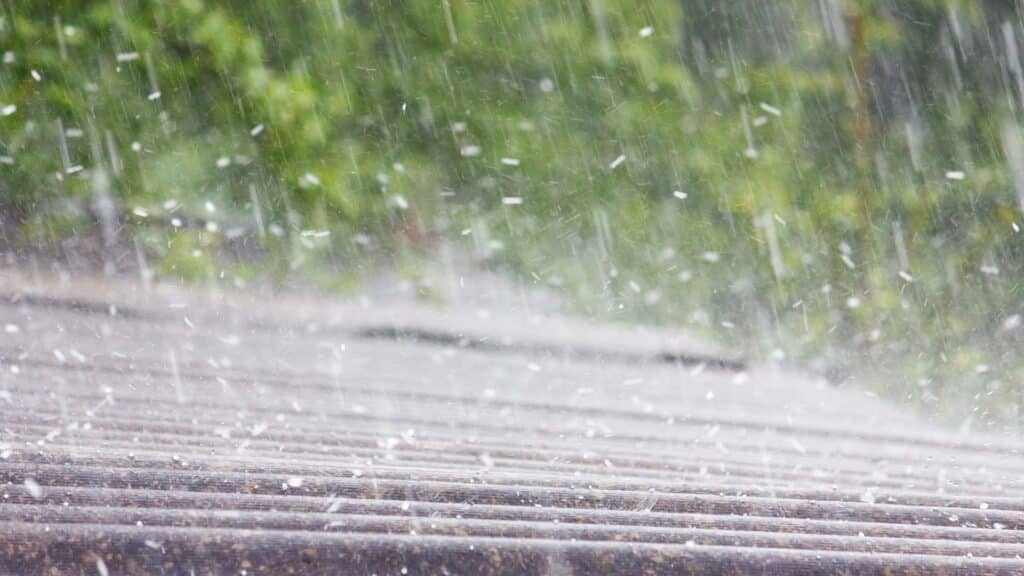
Colorado is one of the most hail-damaged states in the country. The Front Range sits squarely in “Hail Alley,” one of the most active hail zones in North America, according to the NOAA National Severe Storms Laboratory. Hail season runs every spring and summer without fail.
The catch: hail damage is usually invisible from the ground. You might walk outside after a storm and think the roof looks fine. Up on the roof, those shingles have been bruised. The protective granule coating is gone in patches. Every future rain, UV ray, and freeze-thaw cycle now hits unprotected material — like a cracked windshield that holds until it doesn’t.
What Hail Damage Actually Looks Like
A trained roofer looks for round, dark bruise-like marks where granules have been knocked off, dents or cracks in metal flashing around the chimney or vents, dented gutters and downspouts (if the gutters took hits, so did the roof), and soft spots when pressing on a shingle — that softness means the mat underneath is damaged.
How to Handle an Insurance Claim for Hail Damage
- Document first. Photograph dented gutters, damaged window screens, and anything visible on the exterior before you call anyone.
- Get a local roofer’s inspection before calling your insurer. A good roofer documents the damage and helps you understand what you’re dealing with. Roof Masters of Colorado offers free inspections with full damage documentation as part of our hail storm damage and exterior restoration service.
- File within the window. Most Colorado policies give you one year to file a hail damage claim. Don’t wait.
- Know your policy before storm season. Some older policies apply non-recoverable depreciation, meaning they won’t pay the full replacement cost if your roof is past a certain age. The Colorado Division of Insurance offers free consumer guidance on understanding what your homeowners policy actually covers.
Did You Know? If your roof is too old when you file a hail claim, your insurer may only cover 30–40% of replacement costs due to non-recoverable depreciation. Review your policy before storm season — not after.
DIY vs. Calling a Pro
What can you handle yourself? Clearing gutters from a ladder, trimming overhanging branches, doing a visual inspection from the yard, and replacing one or two missing shingles on a low-pitch roof in dry weather are all reasonable DIY tasks — if you’re comfortable doing them.
What should you call a pro for? Anything on a steep section, ridge, or multi-story roof. Any inspection after a hailstorm. Ice dam removal. Flashing repairs around chimneys, skylights, or vents. Any time you see water stains inside the house. Our residential roof repair team handles all of these.
Colorado roofs are steeper on average than most of the country — that’s intentional, to shed snow faster — but it also makes DIY work more dangerous here. Add icy mornings and Front Range wind, and the risk is real.
When Does a Colorado Roof Need to Be Replaced?
The national average lifespan for an asphalt shingle roof is around 20 years. In Colorado, plan for 15 to 18 years — sometimes less after repeated hail seasons or with lower-grade shingles.
Signs it’s time to look into a new roof installation:
- Shingles are curling, cracking, or going bald in multiple areas
- Recurring leaks come back even after repairs
- The roof is over 15 years old and has been through several bad hail seasons
- Sagging anywhere along the roofline — this is a structural issue; call someone immediately
- Mold or moisture damage in attic insulation
“A lot of people wait too long,” Monica says. “They patch it one more time. But after a certain point, you’re spending money to delay the inevitable — and the longer you wait, the more damage reaches your decking and attic. Then a simple roof replacement becomes a much bigger project.”
Is a Class 4 Impact-Resistant Shingle Worth It in Colorado?
A Class 4 shingle is impact-rated and tested to withstand large hail without cracking. In Colorado, it’s one of the smartest upgrades a homeowner can make.
Here’s why it matters in practice: many Colorado insurers offer a 20–30% discount on homeowner’s premiums for Class 4 rated roofs, which can offset the higher upfront cost over time. These shingles also degrade more slowly under repeated hail impact, meaning fewer claims and lower long-term costs.
Roof Masters of Colorado installs Malarkey Class 4 impact-resistant shingles and Owens Corning products — both well-suited for Front Range conditions. Ask your roofer specifically about Class 4 options before signing anything, and call your insurance company to confirm what discount you’d qualify for.
How to Find a Good Roofer in Colorado
After every major hailstorm, out-of-state storm chasers flood neighborhoods within 24 hours. They knock on doors, claim your roof is destroyed, and pressure you to sign before they leave. Most aren’t roofers — they’re salespeople who subcontract work to whoever is cheapest and disappear before you realize the job was done poorly.
Red flags to watch for: showing up unsolicited right after a storm, pressure to sign on the spot, requesting an Assignment of Benefits, no verifiable local address or reviews, no Colorado contractor’s license, or offering a “deductible waiver” — that last one is insurance fraud.
What a legitimate roofer looks like: local Google, Yelp, or BBB reviews going back at least a year, manufacturer certifications like Owens Corning Preferred or Malarkey Certified, a willingness to provide a written itemized estimate before work starts, and proper permit handling on every job.
Almost every reputable roofer offers a free inspection. Get two or three opinions. Don’t let anyone rush you.
Ready to Get Your Roof Checked?
If you’re unsure about your roof’s condition, a free professional inspection before the next hail season is the smartest move you can make. Roof Masters of Colorado serves Boulder, Longmont, Erie, Lafayette, Louisville, and the entire Front Range. We’re local, certified, and trusted by your neighbors. Schedule your free estimate today.
Frequently Asked Questions
How long does a roof last in Colorado? Most asphalt shingle roofs last 15–18 years in Colorado, compared to the national average of around 20 years. High UV at elevation, hailstorms, and freeze-thaw cycles all shorten the lifespan. Higher-quality shingles, like Class 4 impact-resistant products, can extend that range.
How do I know if hail damaged my roof? You usually can’t tell from the ground. After any major hailstorm, have a professional roofer do a free inspection. From the ground, look for dented gutters, damaged window screens, and chipped paint on wood surfaces. On the roof, damage appears as round bruise marks where granules have been knocked away.
What is a Class 4 shingle? A Class 4 shingle has been tested and rated to resist hail impact without cracking. Colorado insurance companies often provide premium discounts for homes with Class 4 roofs. If you’re getting a new roof, ask your contractor about impact-resistant options before signing anything.
Do I need a permit to replace my roof in Colorado? Yes, most Colorado municipalities require a permit for a full roof replacement. A legitimate roofing contractor will handle this for you. If a roofer says permits aren’t necessary, treat that as a red flag.
What should I do right after a hailstorm? Document anything visible from the ground — gutters, window screens, and any exterior damage. Then call a local roofer (not a door knocker) for a free inspection. Don’t sign anything until at least one trusted local contractor has reviewed the damage.